Comparing Data Structures: Array, Sorted Array, Linked List, Sorted Linked List, and Heap
In the world of data structures, choosing the right one for a specific task can greatly impact the performance and efficiency of an algorithm. Here, we compare five common data structures: Arrays, Sorted Arrays, Linked Lists, Sorted Linked Lists, and Heaps. Each has its unique strengths and weaknesses, particularly in terms of insertion, deletion, searching, and access operations.
1. Array
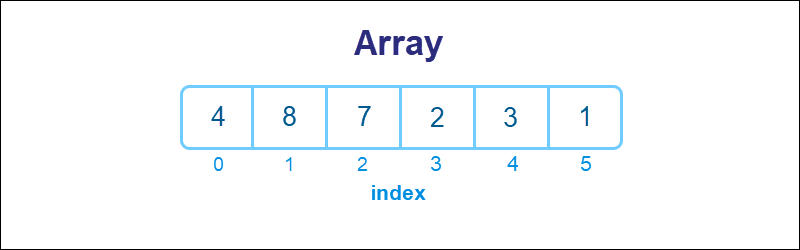
Structure: A collection of elements identified by index.
Operations:
- Insertion: O(1) for adding at the end, O(n) for adding at a specific position.
- Deletion: O(1) for removing the last element, O(n) for removing from a specific position.
- Search: O(n) for unsorted arrays.
- Access: O(1) for direct index access.
Pros:
- Simple and easy to use.
- Constant-time access to elements via indexing.
Cons:
- Fixed size (in static arrays).
- Inefficient insertions and deletions for large arrays due to shifting elements.
2. Sorted Array
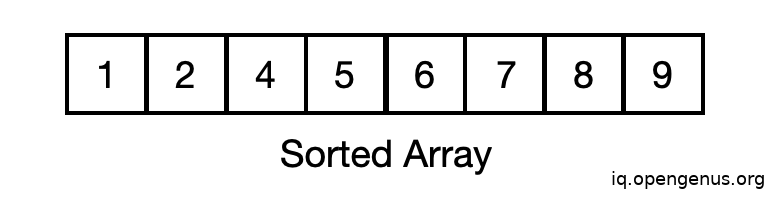
Structure: An array where elements are always kept in a sorted order.
Operations:
- Insertion: O(n) due to the need to shift elements to maintain order.
- Deletion: O(n) for the same reason.
- Search: O(log n) using binary search.
- Access: O(1) for direct index access.
Pros:
- Efficient search operations due to ordered elements.
- Accessing elements is quick with direct indexing.
Cons:
- Insertions and deletions are costly.
- Maintaining sorted order can be complex.
3. Linked List
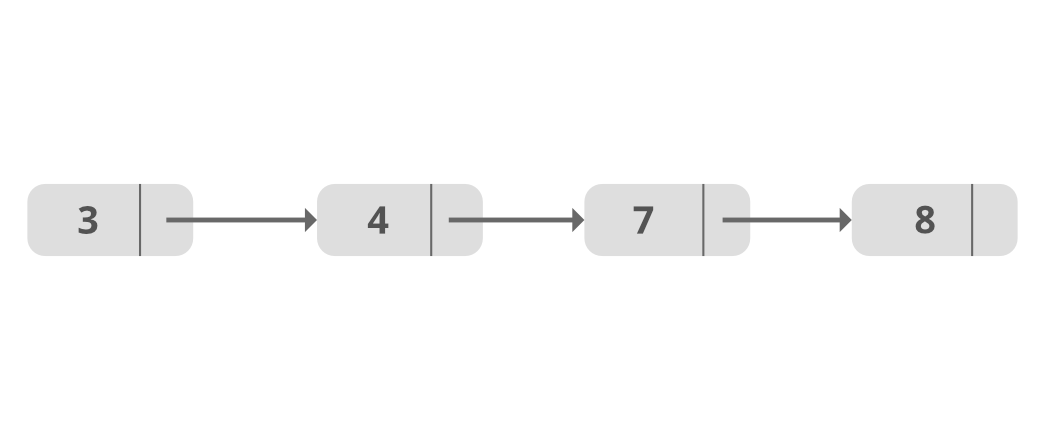
Structure: A collection of nodes where each node contains data and a reference to the next node.

Operations:
- Insertion: O(1) if inserting at the head, O(n) if inserting after a given node.
- Deletion: O(1) if deleting the head, O(n) if deleting a node by value.
- Search: O(n).
- Access: O(n) as you need to traverse the list.
Pros:
- Dynamic size, no need to define size initially.
- Efficient insertions and deletions at the head.
Cons:
- Slow access time due to sequential traversal.
- More memory usage due to storage of pointers.
4. Sorted Linked List
Structure: A linked list where elements are always maintained in sorted order.
Operations:
- Insertion: O(n) as you need to find the correct position.
- Deletion: O(n) for finding and removing a specific node.
- Search: O(n).
- Access: O(n) due to traversal requirements.
Pros:
- Dynamic size with sorted order.
- Useful when frequent insertions and deletions are needed along with a sorted structure.
Cons:
- Slower access and search times.
- Higher overhead due to pointers.
5. Heap
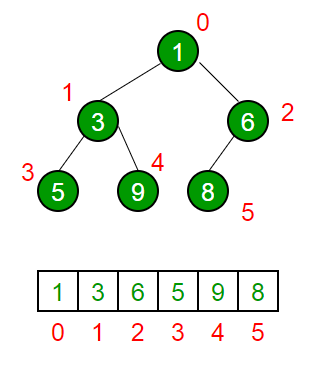
Structure: A complete binary tree where each node is either greater (max-heap) or smaller (min-heap) than its children.
Operations:
- Insertion: O(log n) due to heapify operations.
- Deletion: O(log n) for removing the root and reheapifying.
- Search: O(n) as heaps are not sorted.
- Access: O(1) for accessing the root (min or max element).
Pros:
- Efficient for priority queue operations.
- Good for scenarios requiring frequent retrieval of the minimum or maximum element.
Cons:
- Inefficient for searching specific elements.
- Not suitable for fast random access of arbitrary elements.
Comparison Table
| Data Structure | Insertion | Deletion | Search | Access | Pros | Cons |
|---|---|---|---|---|---|---|
| Array | O(1) (end) | O(1) (end) | O(n) | O(1) | Simple, fast access by index | Fixed size, inefficient middle insertions |
| O(n) (middle) | O(n) (middle) | and deletions | ||||
| Sorted Array | O(n) | O(n) | O(log n) | O(1) | Efficient search, fast access by index | Costly insertions and deletions |
| Linked List | O(1) (head) | O(1) (head) | O(n) | O(n) | Dynamic size, efficient head operations | Slow access, higher memory usage |
| O(n) (middle) | O(n) (middle) | |||||
| Sorted Linked List | O(n) | O(n) | O(n) | O(n) | Dynamic size, sorted order | Slow access, higher memory usage, |
| costly insertions and deletions | ||||||
| Heap | O(log n) | O(log n) | O(n) | O(1) (root) | Efficient for priority queues | Inefficient search, not suitable for |
| fast random access |
Conclusion
Selecting the appropriate data structure depends heavily on the specific requirements of the application. Arrays and sorted arrays are useful for scenarios with frequent random access and less frequent modifications. Linked lists and sorted linked lists are beneficial when dynamic sizing and frequent insertions/deletions are necessary. Heaps are ideal for priority queue operations where quick access to the minimum or maximum element is needed.
Understanding the strengths and weaknesses of each data structure can help in making an informed decision, leading to more efficient and effective code.